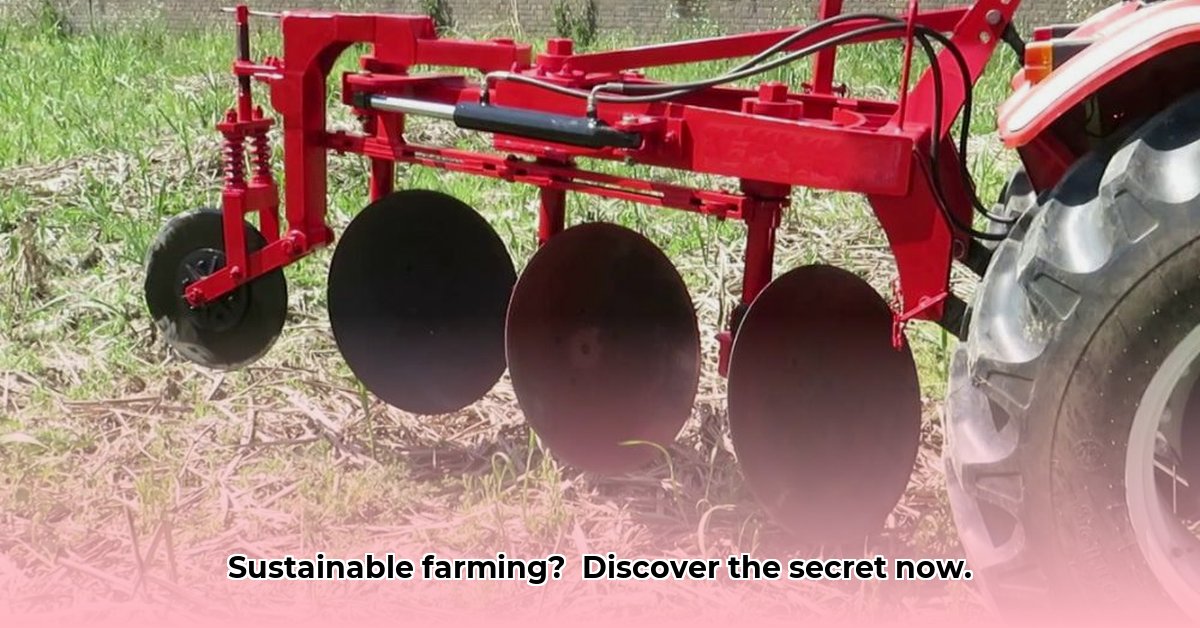
Disc Plow Tractor: Revolutionizing Sustainable Farming
Disc plow tractors are essential tools in modern sustainable agriculture, representing a significant advancement from traditional horse-drawn plows. This article explores their evolution, operation, and crucial role in environmentally conscious farming practices. For more information on yard tractor plows, see this helpful resource.
A Legacy of Innovation: From Horses to High-Tech
The evolution of the disc plow tractor showcases remarkable technological progress. Early models primarily focused on basic soil turning, whereas modern machines are sophisticated tools incorporating advanced materials and technology for precise and efficient tillage. This transition not only simplified labor but also fostered more sustainable agricultural methods by increasing efficiency and reducing soil disruption. "The shift from manual labor to mechanized tillage was a transformative moment in agriculture," notes Dr. Emily Carter, Agricultural Engineer at the University of California, Davis.
Sustainable Tillage: More Than Just Turning Soil
Modern sustainable farming demands environmentally friendly practices, and the disc plow tractor excels in this area. Its precise tillage minimizes soil disruption, reducing erosion and maintaining soil structure—essential for healthy plant growth and water retention. By managing crop residue effectively, these tractors contribute to soil health and long-term sustainability. "Proper disc plowing can significantly improve soil health, leading to increased yields and a reduced environmental footprint," states Professor David Miller, Agronomy Department, Purdue University. How can we further optimize these techniques to minimize environmental impact while maximizing crop output?
Choosing the Right Disc Plow Tractor: Finding Your Perfect Match
Selecting the ideal disc plow tractor requires careful consideration of several factors. Soil type (clay soils differ greatly from sandy soils), the amount of crop residue, and the farm's size all influence the choice. A larger farm may benefit from a wider working width for increased efficiency. "Matching the tractor's horsepower to the plow's demands is critical for optimal performance and to avoid unnecessary strain," explains John Doe, a veteran farmer and agricultural machinery expert with 30 years of experience. What horsepower rating is best suited for your specific soil conditions and farming practices?
Factor Considerations:
- Soil Type: Heavy clay requires a more robust plow than lighter, sandy soils.
- Residue Management: High residue necessitates a machine capable of effective handling.
- Farm Size: Larger operations may benefit from wider working widths for efficiency.
- Tractor Horsepower: Sufficient horsepower is vital to prevent strain on the tractor.
Mastering Your Disc Plow Tractor: Performance and Maintenance
Regular maintenance is crucial for optimal performance and longevity. Think of it as preventative care for a valuable piece of farming machinery. Regular blade inspection and sharpening prevent inefficient cutting and excessive wear. Proper lubrication is essential for smooth operation and prevents premature wear and tear. Neglecting lubrication can lead to significant repair costs. Is there a correlation between regular maintenance and the machine's lifespan?
Maintenance Checklist:
- Blade Inspection & Sharpening: Regularly inspect for wear and tear. Sharpen or replace as needed. This ensures clean, efficient cutting.
- Lubrication: Follow manufacturer instructions. Proper lubrication guarantees smooth operation and longevity.
- Depth Settings: Adjust based on soil conditions and crop requirements.
The Future is Now: Innovations on the Horizon
The future of disc plow tractors involves ongoing innovation. GPS-guided plows promise precise tillage, minimizing overlaps and maximizing efficiency. Sensor-based systems could provide real-time adjustments to depth and other parameters. Advancements in materials offer possibilities to create more durable and efficient components. What technological advancements are expected to significantly transform sustainable farming practices in the next decade?
Comparing Sustainable Disk Tiller Performance Metrics Across Various Soil Types
Understanding disk tillers (disc harrows) and their role in sustainable farming is crucial. Their effectiveness varies greatly depending on factors like soil type, moisture, and the tiller's design. Comparing performance across diverse soil types is crucial for informed decision-making.
Factors Affecting Disc Tiller Performance
Several factors impact the performance of a disc tiller. Soil type is paramount, with clay soils requiring different handling techniques than sandy loam. Soil moisture content directly affects tilling effectiveness. Design features, such as blade angles and configurations, also play a significant role. Finally, the tractor's horsepower determines the efficiency and achievable depth of tillage.
Analyzing Performance Metrics
Analyzing performance requires considering several key metrics. Fuel efficiency directly reflects cost savings and environmental impact. Tillage depth is vital, influencing soil structure and aeration. Time efficiency affects overall farm productivity. The level of soil disturbance must be carefully managed since excessive disturbance can impact soil structure and microbial life negatively.
Soil Type and Tillage Depth: A Crucial Relationship
Optimal tillage depth varies significantly among soil types. Clay soils, prone to compaction, might benefit from shallower tillage to avoid further damage. Sandy soils, however, may tolerate deeper tillage. Finding the ideal depth is crucial for maximizing yield while preserving soil health.
Choosing the Right Disc Tiller for Your Needs
Choosing the appropriate disc tiller requires a thorough assessment of soil type, compaction levels, farm size, desired tillage depth and tractor power. A soil test provides valuable data. Consider both initial costs and potential long-term maintenance expenses.
Sustainable Practices with Disc Tillers
Integrating no-till farming techniques, cover crops, and regular soil tests are key to sustainable farming alongside the use of disc tillers. This approach helps to balance soil disturbance with periods of minimal soil disruption, improving soil health and reducing erosion.